
Brewing Process: Complete Guide to the Beer Brewing Process
Brewing Process: Complete Guide to the Beer Brewing Process
If you are planning to build a brewery, understanding the brewing process is just as important as choosing the right equipment.
The basic beer brewing process is:
Milling → Mashing → Lautering → Wort Boiling → Whirlpool → Cooling & Oxygenation → Fermentation → Maturation → Filtration → Carbonation → Packaging
The equipment may look complicated, but the basic principle is straightforward: convert malt starch into fermentable sugar, separate the wort, boil and prepare it, ferment the sugar into alcohol, then condition and package the beer.
For a brewery investor, understanding this process helps you choose the right brewhouse configuration, fermentation capacity, cooling system, control system and packaging equipment.
This guide explains the complete brewing process from grain to finished beer.
1. What Is the Brewing Process?
The brewing process is a series of controlled steps used to transform malted grain, water, hops and yeast into beer.
Although recipes vary significantly between beer styles, most breweries follow the same fundamental production sequence.
The major stages are:
- Malt milling
- Mashing
- Lautering
- Wort boiling
- Whirlpool
- Wort cooling
- Wort oxygenation
- Fermentation
- Maturation
- Filtration, if required
- Carbonation
- Packaging
The difference between a small craft brewery and a large commercial brewery is generally not the basic brewing principle. The difference is production capacity, automation, equipment configuration, process control and production efficiency.
2. Step 1: Malt Milling
The brewing process starts with malt.
Malt is normally milled before entering the brewhouse. The purpose of milling is to break the grain and expose the starch inside while keeping the husk structure suitable for lautering.
The milling result affects the following stages.
If the malt is milled too finely, lautering can become difficult and the grain bed may become compacted.
If it is milled too coarsely, the brewer may not achieve the desired extraction efficiency.
A brewery may use a traditional dry mill or a wet milling system depending on the production concept.
For a professional brewery, the milling system should be matched to:
- Brewhouse capacity
- Malt consumption
- Brewing frequency
- Required milling speed
- Available floor space
- Automation level
The mill is therefore not simply a machine for crushing grain. It is the first process-control point in the brewing system.
3. Step 2: Mashing
After milling, the crushed malt is mixed with brewing water in the mash vessel.
This stage is called mashing.
The purpose of mashing is to convert starches in the malt into fermentable and non-fermentable sugars through enzymatic activity.
Temperature is one of the most important factors during mashing.
Different temperature rests can influence:
- Fermentability
- Body
- Mouthfeel
- Alcohol potential
- Final gravity
- Beer style
A typical brewing recipe may use one or several temperature stages depending on the malt and beer style.
For example, the brewer may heat the mash through several temperature ranges before reaching the final conversion temperature.
This is one reason why brewery control systems are important.
The brewer needs accurate control of:
Temperature + Time + Mixing
These three factors directly affect the consistency of the wort.
【Internal Link: Insert link to article "Brewery Equipment Guide: Complete Guide to Craft Brewery Equipment" under "Brewery Equipment" here】
4. Step 3: Lautering
Once mashing is complete, the brewer needs to separate the liquid wort from the spent grain.
This process is called lautering.
The mash is transferred or circulated through the lauter tun, where the grain bed acts as a natural filter.
The wort passes through the grain bed while the spent grain remains inside the vessel.
Many breweries use a sparging process to rinse additional extract from the grain.
The objective is to obtain good extract efficiency without creating excessive tannin extraction or slowing the process.
A well-designed lauter system should provide:
- Even wort collection
- Good filtration
- Effective grain bed management
- Appropriate sparging
- Easy spent-grain removal
- Stable production efficiency
For larger breweries, spent-grain handling becomes increasingly important because the quantity of grain produced per brewing day can be substantial.
5. Step 4: Wort Boiling
The collected wort is then transferred to the boiling kettle.
Boiling is one of the key stages of the brewing process.
During boiling, the brewer can:
- Sterilize the wort
- Evaporate unwanted volatile compounds
- Concentrate the wort
- Isomerize hop alpha acids
- Develop desired flavor characteristics
Hops may be added at different points during the boil.
The timing of hop additions affects bitterness, aroma and flavor.
Boiling also affects the final wort volume and gravity, so evaporation must be considered when designing a brewery system.
For a commercial brewery, the kettle needs enough heating capacity and evaporation performance to maintain a stable process.
6. Step 5: Whirlpool
After boiling, the hot wort is transferred into a whirlpool vessel or whirlpool section of the brewhouse.
The purpose is to create a controlled rotational flow.
This helps separate:
- Hop material
- Hot break
- Other solids
The solids collect toward the center of the vessel, while relatively clear wort can be withdrawn from the side.
Whirlpool design can affect wort clarification and brewery operating efficiency.
For this reason, the brewhouse is not simply a collection of stainless steel tanks. The vessels, pumps, piping, valves and process sequence must work together.
7. Step 6: Wort Cooling
Hot wort cannot be sent directly into the fermentation tank.
It needs to be cooled to the appropriate yeast pitching temperature.
A plate heat exchanger is commonly used for rapid wort cooling.
During this process, chilled water or glycol-related cooling infrastructure removes heat from the wort.
The exact pitching temperature depends on the yeast strain and beer style.
Temperature control is especially important because fermentation performance depends heavily on the temperature at which yeast is introduced and maintained.
A complete cooling system may include:
- Plate heat exchanger
- Cold water tank
- Glycol chiller
- Glycol storage tank
- Pumps
- Temperature sensors
- Control valves
- Piping
For breweries, the cooling system should be designed together with the fermentation capacity rather than purchased as an isolated piece of equipment.
8. Step 7: Wort Oxygenation and Yeast Pitching
After cooling, the wort is transferred into a fermentation tank.
Before or during transfer, oxygen may be introduced into the wort at a controlled level.
Yeast is then pitched into the wort.
At this point, the brewing process changes from brewhouse operations to fermentation management.
The quality of the wort entering the fermentation tank is critical.
The brewer needs to control:
- Wort temperature
- Original gravity
- Oxygenation
- Yeast quantity
- Yeast condition
- Fermentation pressure
- Fermentation temperature
This is where the fermentation system becomes one of the most important parts of a brewery.
9. Step 8: Beer Fermentation
Fermentation is the stage where yeast converts fermentable sugars into alcohol and carbon dioxide.
The basic reaction is simple:
Sugar → Alcohol + CO₂ + Flavor Compounds
However, professional fermentation management is much more complicated than this equation suggests.
The brewer needs to monitor:
- Temperature
- Pressure
- Gravity
- Yeast activity
- Fermentation time
- Flavor development
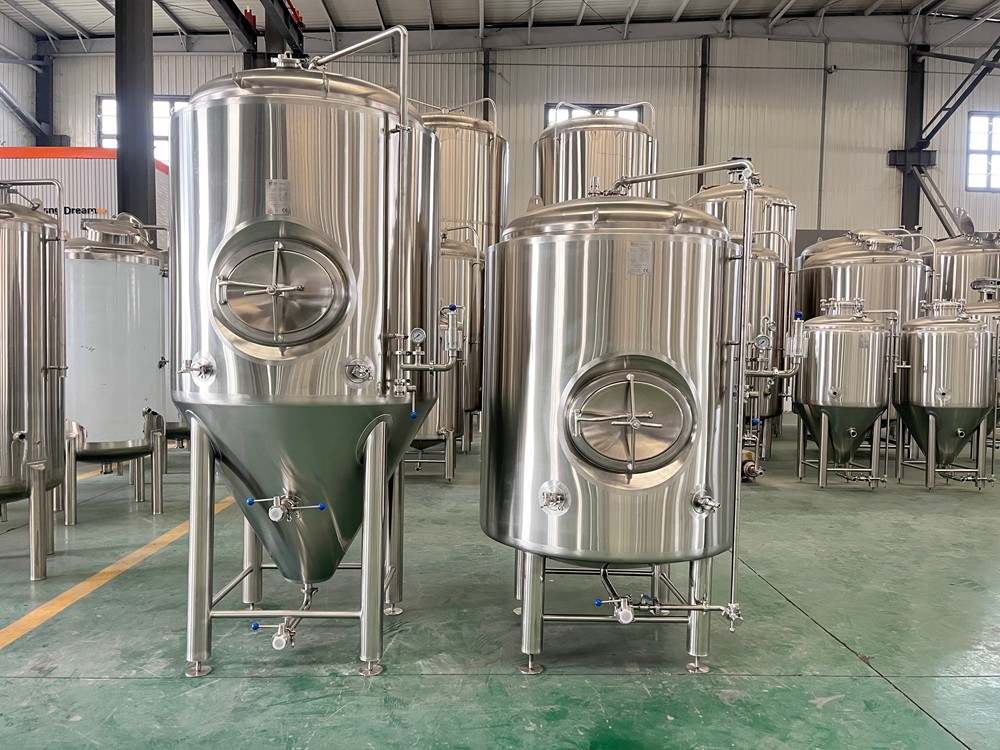
Most modern craft breweries use stainless steel conical fermentation tanks.
These tanks allow the brewer to control fermentation temperature and pressure while also making yeast collection easier.
Fermentation tank sizing should be planned according to the brewery's production schedule.
For example, a brewery producing 1,000 L of wort per batch does not necessarily need only one 1,000 L fermentation tank.
If the brewery wants to produce several batches while previous batches are still fermenting, additional fermentation capacity is required.
This is one of the most common points investors misunderstand when planning a brewery.
Brewhouse capacity determines how much wort you can produce per batch. Fermentation capacity determines how much beer you can have in production at the same time.
10. Step 9: Beer Maturation
After the primary fermentation is completed, the beer may need additional conditioning or maturation.
During this period, the beer can develop a cleaner and more stable flavor profile.
Depending on the beer style and production method, maturation can involve:
- Lower temperatures
- Pressure control
- Yeast sedimentation
- Flavor conditioning
- Carbon dioxide management
The required maturation time varies significantly between beer styles.
A brewery producing fast-turnaround beers may have a different tank utilization strategy from a brewery specializing in lager.
Therefore, the brewery's business plan and beer portfolio should be considered when calculating the required number of fermentation and conditioning tanks.
11. Step 10: Beer Filtration
Not every craft brewery filters its beer.
Some breweries prefer naturally bright beer and rely on tank conditioning and sedimentation.
Other breweries use filtration to achieve a clearer and more consistent appearance.
Filtration may be used when the brewery requires:
- Bright beer
- Stable appearance
- Consistent product quality
- Longer shelf life
- Specific packaging requirements
The decision to install a filtration system should therefore be based on the brewery's products and market requirements.
A small taproom brewery may not need the same filtration equipment as a larger commercial brewery.
12. Step 11: Beer Carbonation
Beer naturally contains carbon dioxide generated during fermentation, but the final carbonation level may need to be adjusted.
Carbonation can be achieved through natural fermentation, tank conditioning or controlled CO₂ injection.
The required carbonation level depends on the beer style and serving method.
Proper carbonation affects:
- Mouthfeel
- Aroma perception
- Foam stability
- Serving performance
- Packaging quality
Carbonation control becomes especially important when beer is packaged into cans, bottles or kegs.
13. Step 12: Beer Packaging
Once the beer reaches the required condition, it can be packaged.
The three common packaging formats are:
Bottles
Bottle packaging remains common in many markets and can be suitable for premium products and traditional beer brands.
Cans
Cans are increasingly popular among craft breweries because they are lightweight, stackable and suitable for modern retail and distribution.
Kegs
Kegs are particularly important for taprooms, restaurants, bars and draft beer distribution.
A brewery may therefore require:
- Bottle filling machine
- Can filling machine
- Keg filling system
- Labeling machine
- Packaging conveyor
- Date coding equipment
【Internal Link: Insert link to article "Brewery Equipment Guide: Complete Guide to Craft Brewery Equipment" under "Brewery Equipment" here】
The packaging system should be selected according to production volume and sales channels rather than simply choosing the fastest machine available.
14. The Complete Brewery Process Flow
A simplified brewery process can be represented as:
Malt Storage
↓
Malt Milling
↓
Mashing
↓
Lautering
↓
Wort Boiling
↓
Whirlpool
↓
Wort Cooling
↓
Oxygenation
↓
Fermentation
↓
Maturation
↓
Filtration / Clarification
↓
Carbonation
↓
Packaging
↓
Finished Beer
This process should also determine the physical layout of the brewery.
Raw materials should enter the brewery efficiently, while finished beer should move toward packaging and storage without unnecessary crossing of production routes.
Brewery Layout Design Guide: How to Design an Efficient Craft Brewery Layout
15. How Brewing Process Affects Brewery Equipment Selection
One of the biggest mistakes when starting a brewery is choosing equipment first and thinking about the process later.
The correct approach is the opposite.
Start with the beer production plan, then design the process, and finally select the equipment.
For example, if you plan to produce 20 different beers, the fermentation and tank-management strategy may be very different from a brewery producing only three core products.
Equipment selection should consider:
Brewhouse Capacity
How much wort do you want to produce per batch?
Brewing Frequency
How many batches will you brew per day?
Fermentation Time
How long will the beer remain in fermentation and maturation?
Annual Production
How many liters or hectoliters do you expect to sell per year?
Packaging Format
Will you sell mainly through kegs, cans, bottles or a combination?
Automation Level
Do you want manual operation, semi-automatic control or a highly automated system?
Future Expansion
Can the brewery add fermentation tanks or packaging capacity later?
These questions are more important than simply asking:
"How much does a brewery tank cost?"
16. Brewing Process and Brewery Capacity
A brewery's production capacity is determined by several connected factors.
For example:
Annual Production = Batch Volume × Batches × Brewing Days × Production Efficiency
However, this is only a simplified calculation.
Real production capacity also depends on fermentation time, tank utilization, cleaning time, packaging capacity, labor and sales demand.
A brewery with a 2,000 L brewhouse may produce much more annual beer than another brewery with the same brewhouse if it has:
- More fermentation tanks
- Better tank utilization
- Faster turnaround
- Longer operating hours
- Efficient cooling
- Efficient CIP
- Higher packaging capacity
This is why brewery capacity should never be evaluated from brewhouse volume alone.
17. Temperature and Time: The Two Most Important Process Variables
For brewery equipment engineers, two variables appear repeatedly throughout the entire brewing process:
Temperature and time.
Mashing depends on temperature and time.
Boiling depends on temperature and time.
Fermentation depends heavily on temperature and time.
Maturation depends on temperature and time.
Cleaning also depends on temperature, chemical concentration and contact time.
This is why a brewery control system is not simply designed to turn pumps on and off.
A good control system helps the brewer maintain repeatable process conditions.
For a commercial brewery, repeatability is critical.
You do not want one batch of beer to taste different from another simply because a valve was opened too early or a temperature was manually set incorrectly.
18. Manual, Semi-Automatic or Automatic Brewing?
There are three common approaches.
Manual Brewing
The brewer controls most valves, pumps and process steps manually.
Advantages:
- Lower initial equipment cost
- Simple system
- High operator involvement
Disadvantages:
- Greater dependence on operator experience
- More possibility of operating mistakes
- Lower process repeatability
Semi-Automatic Brewing
The operator controls the main process while the PLC and control system manage selected operations.
This is often a practical solution for small and medium-sized craft breweries.
Advantages include:
- Better process consistency
- Reduced valve-operation mistakes
- Easier temperature control
- Reasonable investment
- Flexibility for experienced brewers
Automatic Brewing
Most major process operations are controlled automatically.
Advantages:
- High repeatability
- Reduced labor requirement
- Easier process monitoring
- Suitable for larger production
However, automation increases the initial investment and system complexity.
The correct solution depends on the brewery's production scale and operating philosophy.
19. CIP and Hygiene in the Brewing Process
Cleaning is not a separate issue from brewing.
It is part of the brewing process.
A brewery must clean and sanitize tanks, pipelines, heat exchangers, filling equipment and other product-contact surfaces.
A typical CIP process may involve:
- Pre-rinse
- Caustic cleaning
- Intermediate rinse
- Acid cleaning when required
- Final rinse
- Sanitization
The exact cleaning procedure depends on the equipment and brewery process.
A properly designed CIP system can improve:
- Cleaning consistency
- Labor efficiency
- Hygiene
- Production turnaround
- Equipment service life
For larger systems, CIP design should be considered during the initial brewery engineering stage rather than added as an afterthought.
20. How to Design a Brewery Around the Brewing Process
A brewery should be designed around material flow.
The general flow is:
Raw Materials → Brewhouse → Fermentation → Maturation → Filtration → Packaging → Finished Beer
The physical layout should minimize unnecessary movement.
For example:
- Malt storage should be close to the milling system.
- The brewhouse should connect efficiently to hot and cold water systems.
- Fermentation tanks should be accessible for cleaning and maintenance.
- Glycol piping should be designed efficiently.
- Packaging should be positioned logically after the beer production area.
- CIP equipment should be accessible to the tanks and pipelines.
- Drainage should be adequate for cleaning operations.
Good brewery design is therefore not simply about fitting tanks into an empty building.
It is about creating an efficient production system.
21. Choosing the Right Brewery Equipment Manufacturer
When purchasing brewery equipment, do not evaluate a supplier only by equipment price.
You should also evaluate:
- Engineering experience
- Equipment material
- Welding quality
- Tank insulation
- Heating system
- Cooling system
- Control system
- Piping design
- CIP design
- Installation support
- Commissioning support
- Spare parts
- After-sales service
- Ability to support future expansion
A brewery equipment manufacturer should understand not only how to manufacture stainless steel tanks, but also how the entire brewing process works.
This is particularly important when the brewery is being designed from an empty building.
Shandong LD Machinery CO., LTD. works with brewery customers not only on equipment supply but also on brewery process planning, equipment configuration and project implementation.
For more information about brewery equipment and brewery project solutions, visit www.micbrew.com.
22. Brewing Process for a New Brewery: What Should You Plan First?
If you are starting a brewery from zero, do not begin by purchasing random tanks.
Start with these questions:
1. What beer will you produce?
Ale, lager, IPA, stout and other styles can have different process requirements.
2. How much beer do you want to produce?
Determine your target batch size and annual production.
3. How often will you brew?
One batch per day and three batches per day create very different equipment requirements.
4. How long will your beer remain in fermentation?
This determines the number of fermentation tanks you need.
5. How will you sell the beer?
Taproom, restaurants, distributors, retail and export markets may require different packaging solutions.
6. Will you expand later?
If expansion is likely, design the building, utilities and pipeline system with future growth in mind.
7. What level of automation do you need?
This determines the control system and operating method.
Once these questions are answered, the equipment configuration becomes much easier to determine.
【Internal Link: Insert link to article "How to Start a Brewery: Complete Guide to Opening a Craft Brewery" under "Brewery Startup Guide" here】
23. Brewing Process and Brewery Equipment Work Together
A professional brewery is a complete production system.
The brewhouse, fermentation tanks, glycol system, CIP system, control cabinet, pumps, valves, piping and packaging equipment must work together.
For example:
Brewhouse too large + insufficient fermentation tanks = unused brewing capacity
Large fermentation capacity + undersized cooling system = cooling bottleneck
High-speed filling machine + insufficient beer production = packaging equipment underutilization
Large tanks + poor layout = difficult operation and maintenance
Therefore, equipment should never be selected independently.
The correct design begins with the production process and works backward toward the equipment configuration.
24. Frequently Asked Questions
What are the main steps in the brewing process?
The main steps are malt milling, mashing, lautering, wort boiling, whirlpool, wort cooling, oxygenation, fermentation, maturation, filtration if required, carbonation and packaging.
How long does the brewing process take?
The brewhouse portion can often be completed within a single production day, but the complete beer production cycle is much longer because fermentation and maturation can take days or weeks depending on the beer style.
What is the most important stage of brewing?
There is no single stage that determines everything. Mashing, wort production, fermentation and temperature control all have a major impact on the final beer.
What temperature is used for brewing?
Different stages use different temperatures. Mashing, wort cooling and fermentation each have their own target ranges, which depend on the recipe, raw materials and yeast strain.
Do all craft breweries filter beer?
No. Many craft breweries sell naturally conditioned or naturally bright beer without filtration. The decision depends on the brewery's product strategy and market requirements.
What equipment is needed for the brewing process?
A complete brewery may include a malt mill, brewhouse, fermentation tanks, bright beer tanks, glycol cooling system, CIP system, pumps, piping, control system and packaging equipment.
How many fermentation tanks does a brewery need?
It depends on brewhouse size, brewing frequency, fermentation time and annual production target. Fermentation capacity should be calculated from the complete production schedule rather than simply matching the brewhouse volume.
Is automatic brewing better than manual brewing?
Not necessarily. Automation can improve consistency and reduce operator mistakes, but the best system depends on production scale, labor availability, budget and the brewery's operating requirements.
Conclusion
The brewing process is a connected system, not a collection of individual machines.
From malt milling and mashing to fermentation, maturation and packaging, every stage affects the next one.
For a new brewery, the best approach is to determine:
Beer Style → Production Target → Brewing Schedule → Fermentation Capacity → Cooling Capacity → Packaging Method → Equipment Configuration → Brewery Layout
Once these factors are clear, you can design a brewery that is easier to operate, easier to expand and more efficient to produce beer with.
If you are planning a new craft brewery or upgrading an existing brewery, Shandong LD Machinery CO., LTD. can support you with brewery equipment selection, process planning, brewery layout and complete brewery project solutions.
Shandong LD Machinery CO., LTD.
Website: www.micbrew.com
Whether you are planning a 300L, 500L, 1000L, 2000L, 3000L or larger craft brewery, the right equipment should be designed around your actual brewing process and production goals—not simply around the cheapest equipment quotation.
PRODUCTS
Related recommendations
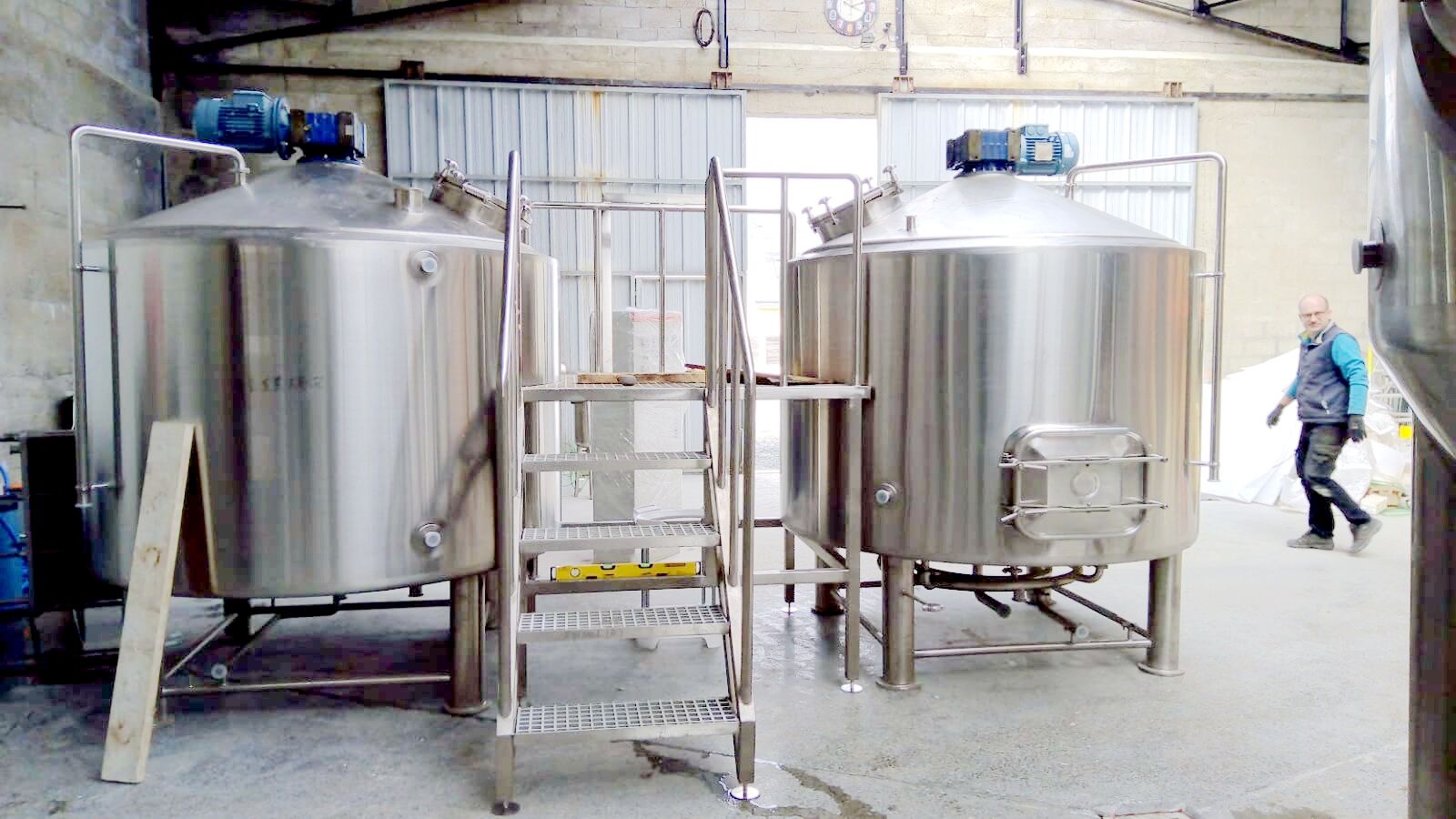
 2000L Craft Beer Brewery in FranceThis 2000L beer brewery is under assemble right now, will be finished soon.
It contains 2 vessels brewhouse, 2000L fermenter, and other necessary system.
Cooling system is stainless steel pipeline, which is assembled at our factory, you can assemble it easily.
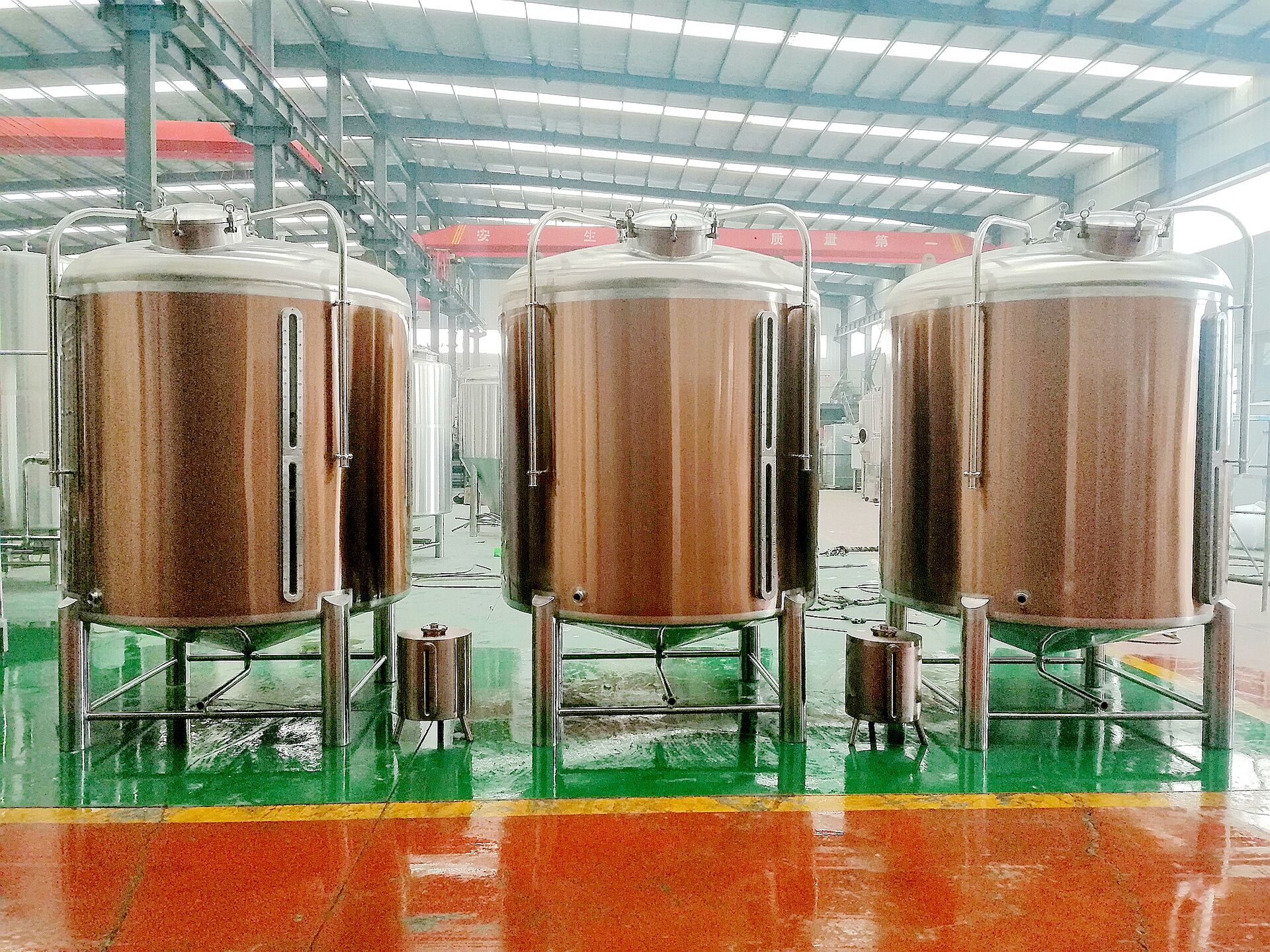
We write number on each pipe port, it is easy for you to assemble this brewery based on number, it is good during this COVID-19 period. 1000L Copper Bright Beer Tank in Ireland-These bright beer tanks (BBTs) were recently installed in Ireland as part of an expansion project for a 1000L craft beer brewery. In addition to serving as brite tanks for beer conditioning, they are also used as storage tanks for a distillery, offering dual functionality in both brewing and distilling operations.
-Each tank features a double-layer construction, with an inner layer made of SUS304 stainless steel for sanitary beer contact, and an outer layer clad in copper for a classic, eye-catching appearance. These copper-clad beer tanks combine both performance and aesthetics, making them a standout feature in the brewhouse.
-Not only are they practical, but these tanks also bring a touch of beauty to the brewery—as functional as they are visually striking. 1000L Brewery in FranceSuccessful 1000L Craft Beer Brewery Installed in France
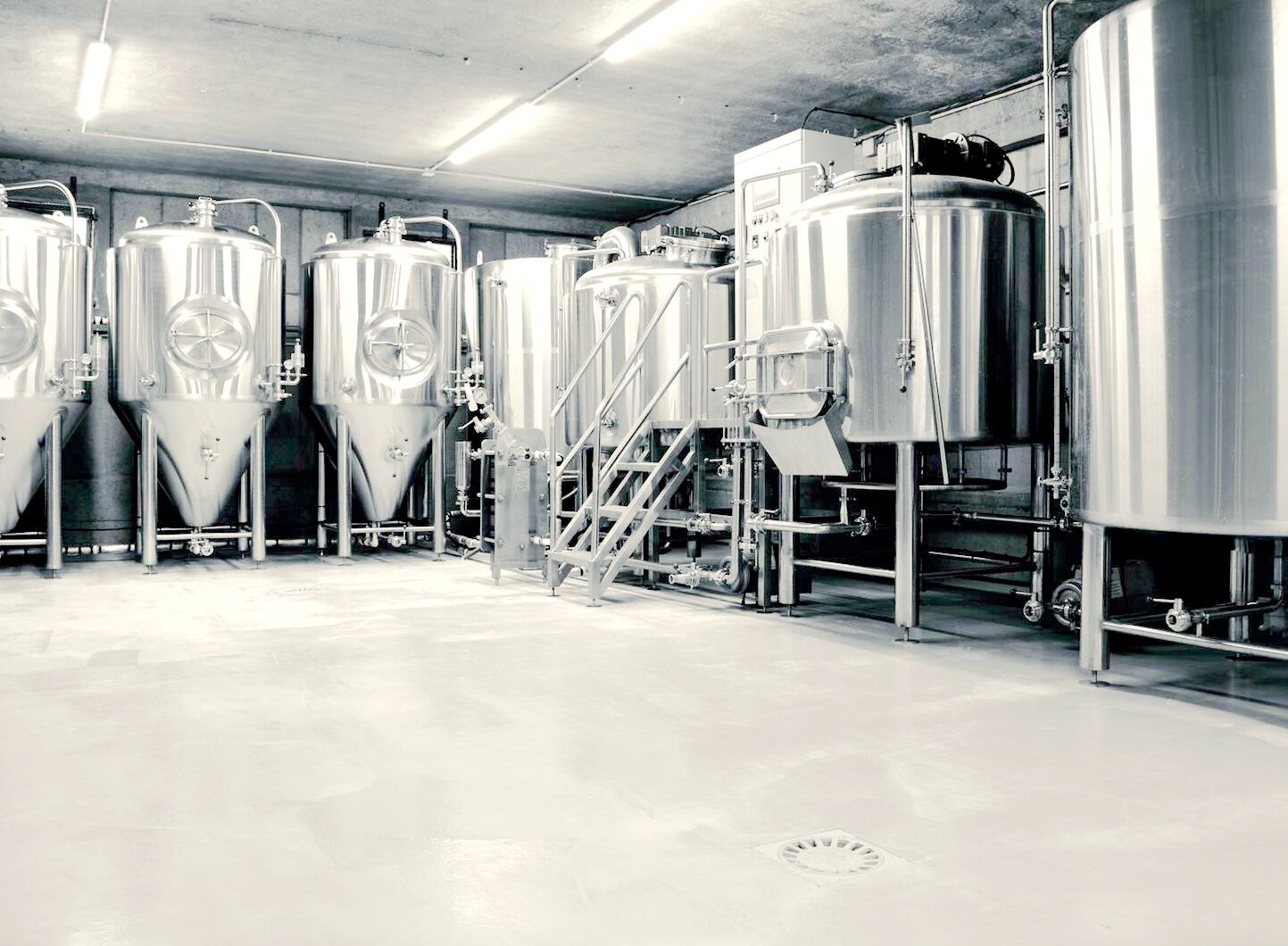
This 1000L beer brewery was successfully installed in France in 2020 as a turnkey craft beer brewing system. The initial setup included a 1000L brewhouse, four 1000L conical fermenters, along with a keg filling and washing machine—an efficient solution for small to mid-sized breweries.
Due to increasing demand and smooth operation, the brewery was expanded in 2021 with an additional eight 2000L fermentation tanks, significantly boosting production capacity.
Today, this craft beer brewery in France is running efficiently with LD brewing equipment and has become a profitable and growing business for its owner—showing how high-quality brewhouse and fermentation systems can help brewers scale up and succeed in the competitive craft beer market.
Please give us a message