
Brewery Equipment Cost: Complete Guide to Craft Brewery Equipment Pricing
What Determines Brewery Equipment Cost?
Many customers ask:
"How much does brewery equipment cost?"
The answer depends on several key factors:
Brewery production capacity
Number of fermentation tanks
Equipment configuration
Automation level
Packaging requirements
Custom design requirements
Two breweries with the same brewhouse size can have very different prices because their configurations may be completely different.
【Brewery Equipment Guide: Complete Guide to Craft Brewery Equipment】
1. Brewery Size and Production Capacity
The biggest factor affecting brewery equipment cost is production capacity.
A larger brewery requires:
Larger tanks
More stainless steel material
More powerful cooling systems
Larger pumps
More complex utilities
Common craft brewery sizes include:
Small Brewery Equipment
Capacity:
300L–500L
Suitable for:
Brewpubs
Restaurants
Local beer brands
Advantages:
Lower initial investment
Easier operation
Suitable for testing the market
Medium Brewery Equipment
Capacity:
1000L–2000L
Suitable for:
Professional craft breweries
Regional distribution
Growing beer businesses
Advantages:
Better production efficiency
More competitive cost per liter
Expansion possibility
Large Commercial Brewery Equipment
Capacity:
3000L+
Suitable for:
Large production
National distribution
Established brands
Advantages:
Higher output
Industrial production capability
2. Brewhouse Cost
The brewhouse is one of the most important parts of brewery equipment.
The cost depends on:
Number of vessels
Heating method
Automation level
Material thickness
Manufacturing quality
Common brewhouse configurations:
2-Vessel Brewhouse
Includes:
Mash/Lauter tank
Kettle/Whirlpool tank
Advantages:
Lower cost
Suitable for many craft breweries
3-Vessel Brewhouse
Includes:
Mash tank
Lauter tank
Kettle/Whirlpool tank
Advantages:
Higher efficiency
Better for frequent brewing
4-Vessel Brewhouse
Suitable for:
Large breweries
High production requirements
Advantages:
Maximum flexibility and efficiency
3. Fermentation Tank Cost
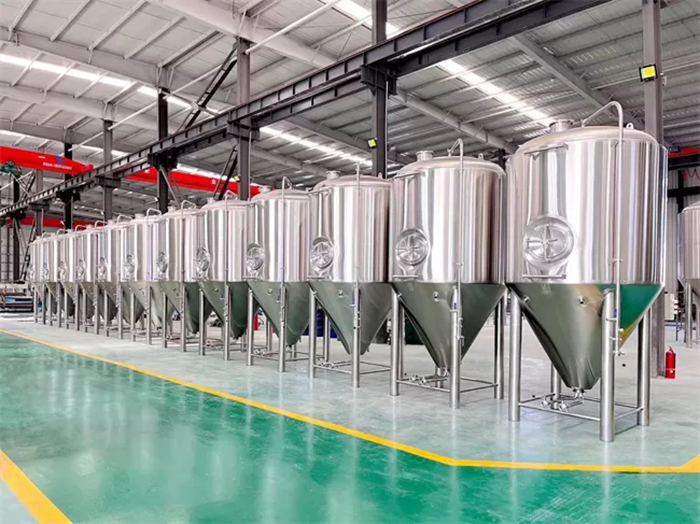
Fermentation tanks are another major part of brewery investment.
The required quantity depends on:
Brewing frequency
Beer styles
Fermentation time
Sales volume
For example:
A brewery producing many beer styles may need more fermentation tanks even with a smaller brewhouse.
Important factors affecting fermentation tank prices:
Tank volume
Stainless steel thickness
Pressure rating
Cooling jacket design
Internal polishing quality
4. Cooling System Cost
A professional brewery requires a reliable cooling system.
The system usually includes:
Glycol chiller
Glycol tank
Cooling pumps
Pipeline system
Temperature control
Cooling system cost depends on:
Total fermentation volume
Local climate
Production schedule
An undersized cooling system can cause:
Slow fermentation
Poor beer quality
Production delays
5. Automation Level and Control System Cost
Automation affects both equipment price and operating efficiency.
Manual Control System
Features:
Lower investment
More operator involvement
Suitable for:
Small breweries
Semi-Automatic Control System
Features:
Balance between cost and efficiency
Popular choice for craft breweries
Fully Automatic Control System
Features:
Higher consistency
Reduced labor requirement
Suitable for:
Large production breweries
6. Packaging Equipment Cost
Packaging requirements can significantly affect total brewery investment.
Common options include:
Keg Filling Equipment
Suitable for:
Taprooms
Restaurants
Draft beer distribution
Bottle Filling Equipment
Suitable for:
Retail sales
Traditional markets
Can Filling Equipment
Increasingly popular because cans provide:
Easy transportation
Better protection from light
Modern market appeal
Example Brewery Equipment Investment Range
The following examples are only general references because every brewery project is customized.
Small Craft Brewery
Typical configuration:
300L–500L brewhouse
Several fermentation tanks
Basic cooling system
Suitable for:
Brewpub
Restaurant brewery
1000L Brewery System
Suitable for:
Professional craft breweries
Local distribution
Typical configuration:
1000L brewhouse
Multiple fermentation tanks
Cooling system
CIP system
Packaging solution
【How to Start a Brewery: Complete Guide to Opening a Craft Brewery】
2000L Brewery System
Suitable for:
Growing craft beer companies
Regional markets
Usually includes:
Higher fermentation capacity
Larger cooling system
More advanced packaging options
Hidden Costs When Starting a Brewery
Many new investors only consider equipment prices.
However, a complete brewery project also includes:
Building Preparation
Including:
Floor drainage
Water supply
Electricity
Ventilation
Shipping Cost
International projects may include:
Ocean freight
Insurance
Import fees
Installation Cost
Including:
Equipment positioning
Pipe connection
Electrical connection
Testing
Operating Cost
Including:
Raw materials
Labor
Utilities
Maintenance
How to Reduce Brewery Equipment Investment?
Reducing cost does not mean choosing the cheapest supplier.
Better methods include:
1. Choose the Correct Capacity
Do not buy oversized equipment before market demand is proven.
2. Plan Future Expansion
A good brewery design allows:
Additional tanks
More packaging capacity
Production upgrades
3. Work With an Experienced Manufacturer
An experienced supplier can help avoid:
Wrong equipment selection
Unnecessary investment
Layout problems
How to Choose a Brewery Equipment Manufacturer?
Before ordering equipment, check:
Manufacturing Experience
Look for:
Previous brewery projects
Export experience
Technical capability
Equipment Quality
Important points:
Stainless steel quality
Welding quality
Pressure testing
Surface polishing
Technical Support
A reliable supplier should provide:
Brewery design
Installation guidance
Operation support
FAQ About Brewery Equipment Cost
How much does brewery equipment cost?
Brewery equipment cost depends on production capacity, configuration, automation level, and packaging requirements. Small systems may require tens of thousands of dollars, while commercial systems require larger investment.
What is the cost of a 1000L brewery system?
A 1000L brewery system price depends on the number of tanks, automation level, and additional equipment. A complete project quotation requires understanding the customer's production goals.
Is used brewery equipment cheaper?
Used equipment may have a lower purchase price, but buyers should consider:
Equipment condition
Remaining service life
Replacement parts availability
Technical support
What is the most important equipment in a brewery?
The brewhouse and fermentation system are the core equipment. However, the entire system must work together to achieve stable beer production.
Conclusion
Brewery equipment cost depends on much more than the equipment list itself.
A successful investment requires balancing:
Production capacity
Equipment quality
Future expansion
Operating efficiency
Total project cost
Choosing the right brewery equipment manufacturer helps you build a reliable brewery system instead of simply buying machines.
Shandong LD Machinery CO., LTD provides complete craft brewery solutions from 300L to 5000L, including brewery design, equipment manufacturing, installation support, and technical consulting.
Whether you are planning a small craft brewery or a commercial beer production facility, selecting the right equipment configuration is the first step toward long-term success.
PRODUCTS
Related recommendations
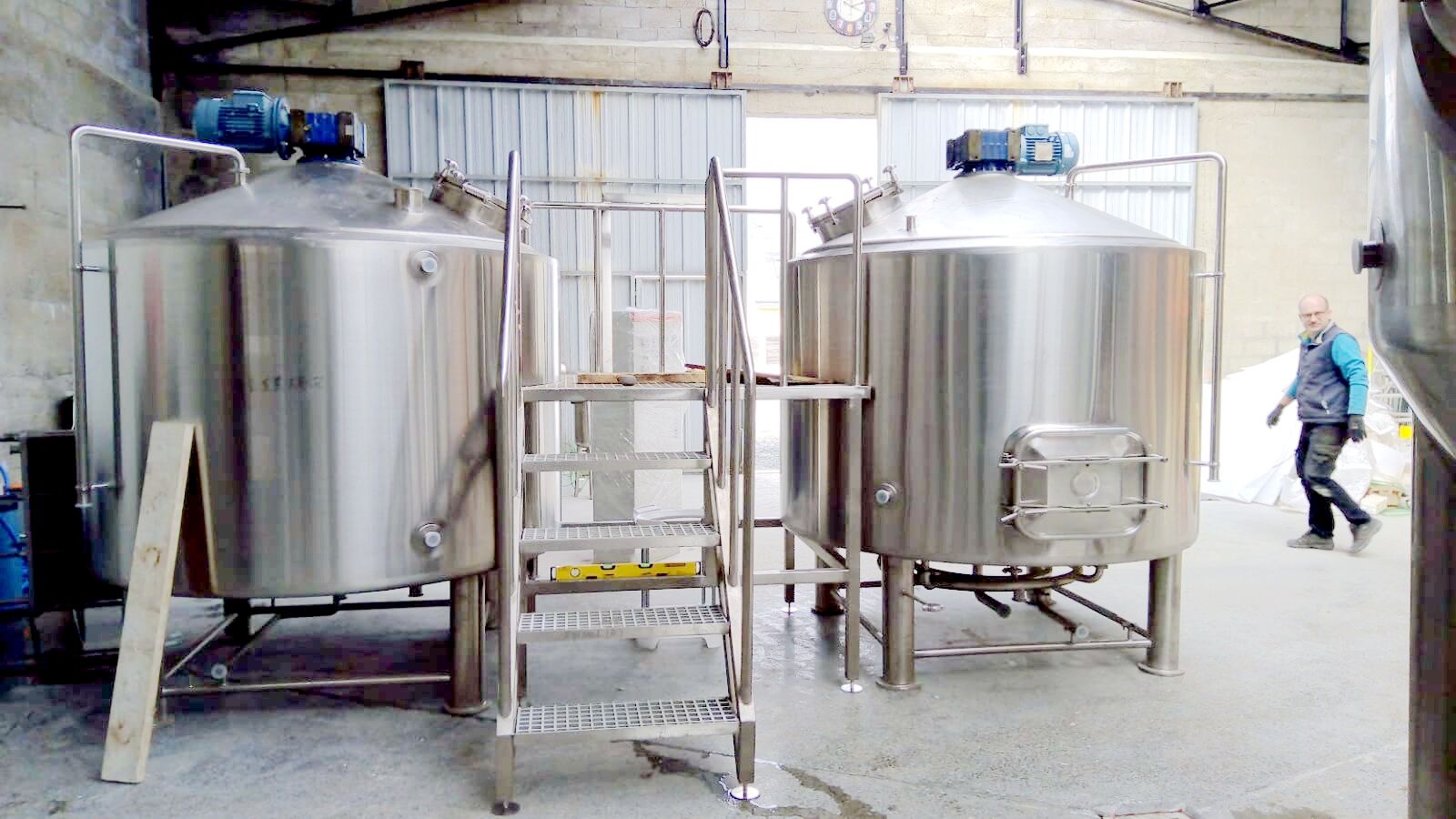
 2000L Craft Beer Brewery in FranceThis 2000L beer brewery is under assemble right now, will be finished soon.
It contains 2 vessels brewhouse, 2000L fermenter, and other necessary system.
Cooling system is stainless steel pipeline, which is assembled at our factory, you can assemble it easily.
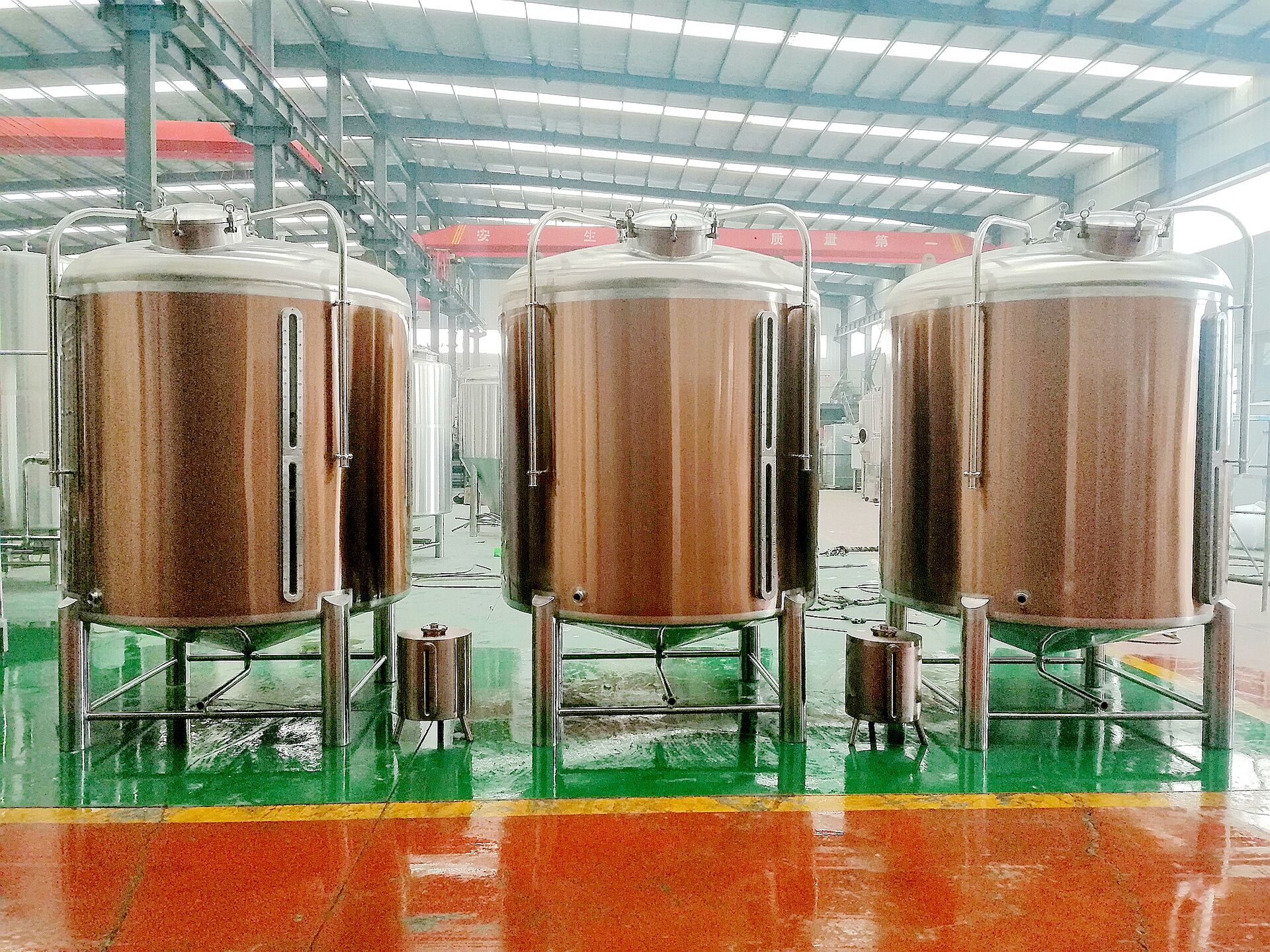
We write number on each pipe port, it is easy for you to assemble this brewery based on number, it is good during this COVID-19 period. 1000L Copper Bright Beer Tank in Ireland-These bright beer tanks (BBTs) were recently installed in Ireland as part of an expansion project for a 1000L craft beer brewery. In addition to serving as brite tanks for beer conditioning, they are also used as storage tanks for a distillery, offering dual functionality in both brewing and distilling operations.
-Each tank features a double-layer construction, with an inner layer made of SUS304 stainless steel for sanitary beer contact, and an outer layer clad in copper for a classic, eye-catching appearance. These copper-clad beer tanks combine both performance and aesthetics, making them a standout feature in the brewhouse.
-Not only are they practical, but these tanks also bring a touch of beauty to the brewery—as functional as they are visually striking. 1000L Brewery in FranceSuccessful 1000L Craft Beer Brewery Installed in France
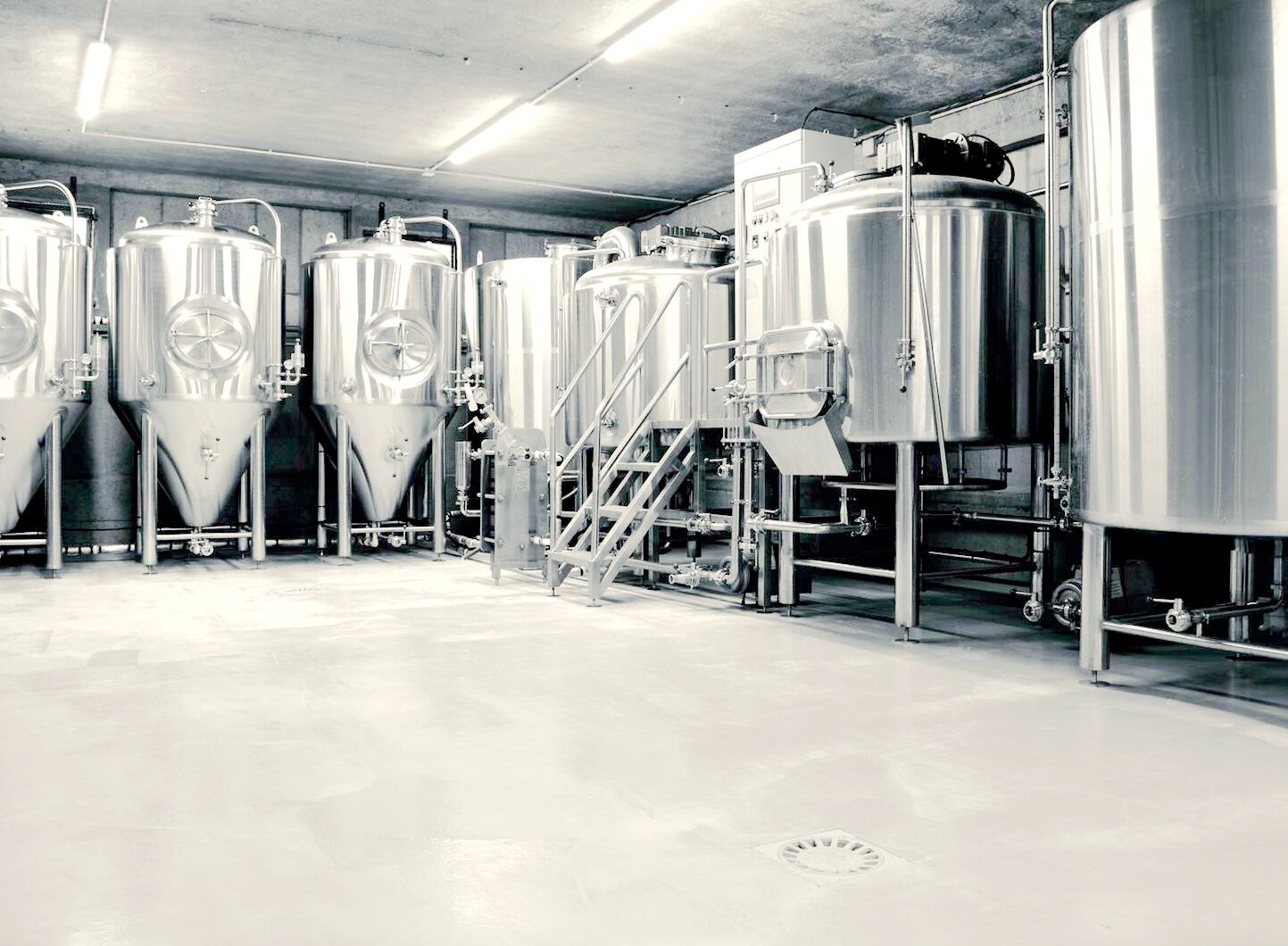
This 1000L beer brewery was successfully installed in France in 2020 as a turnkey craft beer brewing system. The initial setup included a 1000L brewhouse, four 1000L conical fermenters, along with a keg filling and washing machine—an efficient solution for small to mid-sized breweries.
Due to increasing demand and smooth operation, the brewery was expanded in 2021 with an additional eight 2000L fermentation tanks, significantly boosting production capacity.
Today, this craft beer brewery in France is running efficiently with LD brewing equipment and has become a profitable and growing business for its owner—showing how high-quality brewhouse and fermentation systems can help brewers scale up and succeed in the competitive craft beer market.
Please give us a message